 ×
×
Bellows have become indispensable components in modern industrial engineering, serving critical functions across countless applications where traditional rigid piping and mechanical systems fall short. Whether absorbing thermal expansion, isolating vibration, or accommodating complex movement in confined spaces, bellows provide engineers with reliable solutions that improve system performance and extend equipment lifespan. Understanding why bellows matter requires examining their fundamental role in addressing real-world engineering challenges.
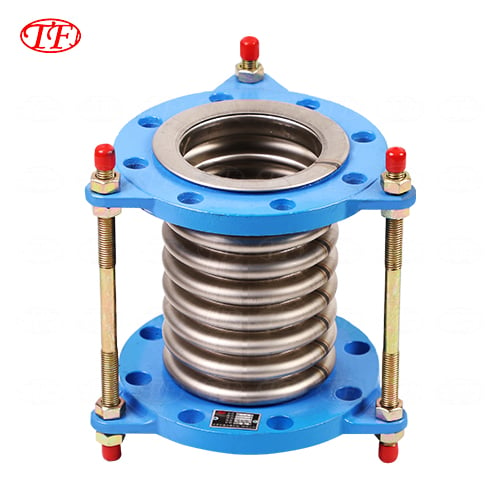
Modern industrial systems operate under extreme conditions that demand precision, flexibility, and durability. Bellows excel in these demanding environments because they combine mechanical sophistication with straightforward functionality. From power generation and petrochemical processing to aerospace and semiconductor manufacturing, bellows components integrate seamlessly into systems where failure is not an option and performance margins matter deeply.
Thermal expansion represents one of the most significant challenges in industrial piping systems. When liquids and gases flow through pipes at elevated temperatures, the metal naturally expands, creating internal stress that rigid piping cannot accommodate. Without proper accommodation, bellows would be unnecessary, but the reality is that uncontrolled thermal expansion causes misalignment, joint fatigue, and catastrophic leaks. This is precisely why bellows have become essential in industrial applications.
Bellows function as mechanical springs that compress and extend in response to temperature changes. The corrugated design of bellows allows controlled axial, lateral, and angular movement without permanent deformation. When a piping system containing hot fluid experiences a temperature rise, the metal wants to expand. Traditional bellows compensators accommodate this movement by absorbing the expansion energy rather than transferring stress to pipe joints, anchors, and connected equipment. This elastic response prevents the catastrophic failures that would result from rigid connections.
The internal corrugations in bellows create small chambers of air or inert gas that provide cushioning during compression and extension cycles. Each corrugation acts independently, distributing the stress load evenly across the entire surface. This sophisticated design explains why bellows components can withstand millions of operating cycles in petrochemical refineries, power plants, and other high-temperature environments where equipment reliability directly impacts operational continuity.
When thermal expansion forces accumulate in rigid pipe systems, the stress transfers directly to pumps, compressors, valves, and other expensive equipment. These devices are designed to handle operational loads, not structural movement accommodation. Installing bellows strategically within a piping network redirects expansion energy away from sensitive components, dramatically reducing maintenance requirements and extending equipment service life. This protective function makes bellows economically essential in industrial facilities where downtime directly impacts profitability.
Beyond thermal management, bellows serve a critical secondary function in isolating vibration throughout industrial systems. Pumps, compressors, and rotating machinery generate continuous mechanical vibration that propagates through rigid piping. Without proper vibration damping, this energy transfers to building structures, connected equipment, and precision instruments, causing accelerated wear and operational problems. Bellows components interrupt vibration transmission by introducing flexible absorption points that prevent oscillation from reaching sensitive areas of the system.
When centrifugal pumps operate at steady state, they produce harmonic vibration at characteristic frequencies. This vibrational energy naturally wants to travel along the fluid pathway, creating resonance conditions in rigid piping networks. Bellows act as mechanical dampers by converting vibrational motion into elastic deformation and controlled energy dissipation. The corrugated structure provides multiple flexibility points, each absorbing and releasing energy in a controlled manner. This vibration isolation capability becomes increasingly important in systems operating at higher pressures and frequencies where resonance amplification poses safety risks.
Industrial facilities must control noise emissions for worker safety and environmental compliance. Vibrating piping systems generate substantial noise that propagates through structural elements into surrounding work areas. By installing bellows at strategic points near rotating equipment, engineers effectively decouple the vibration source from the building structure. This noise reduction benefit provides safety improvements and regulatory compliance advantages alongside the primary function of equipment protection. The investment in proper bellows installation pays dividends through reduced maintenance emergencies, improved workplace conditions, and extended equipment longevity that appears across annual operating budgets.
Industrial systems rarely exist in perfectly aligned configurations. Thermal effects, structural settlement, and operational dynamics create scenarios where piping requires simultaneous axial, lateral, and angular movement accommodation. Bellows components provide this multi-directional flexibility that rigid connectors cannot achieve. In semiconductor manufacturing clean rooms, aerospace fuel systems, and pharmaceutical processing facilities, the ability to accommodate complex three-dimensional movement without introducing contamination or performance degradation makes bellows absolutely essential.
Many modern industrial facilities operate under tight spatial constraints. Equipment must fit within existing structures, work around infrastructure obstacles, and maintain accessible service points. A bellows compensator addresses these spatial limitations by providing compact movement accommodation without requiring long expansion loops or large offset configurations. Where traditional bend-style piping layouts would consume significant space and create accessibility problems, bellows enable space-efficient system design. This spatial advantage becomes critical in retrofit projects, expansion installations, and facilities operating at high density utilization levels.
In applications requiring extraordinary precision, bellows prevent movement-induced drift that would compromise system performance. Semiconductor fabrication equipment, precision fluid delivery systems, and medical device manufacturing all rely on bellows to maintain system integrity under dynamic conditions. The smooth, controlled movement provided by bellows ensures that connected instrumentation and sensitive components experience only gradual, minimal displacement. This precision accommodation capability extends beyond mechanical function into the critical realm of product quality, manufacturing consistency, and regulatory compliance that defines modern industrial operations.
Industrial bellows are commonly manufactured from stainless steel, carbon steel, or specialized alloys depending on application requirements. Stainless steel bellows provide superior corrosion resistance for chemical processing applications, while carbon steel bellows work effectively in lower-temperature steam systems. High-temperature applications often require nickel-based alloys or superalloys that maintain strength and flexibility at elevated operating temperatures. The material selection for any specific bellows installation depends on pressure ratings, temperature exposure, corrosive environment characteristics, and expected service life within the particular industrial system.
Proper bellows selection requires detailed analysis of system operating conditions including maximum operating pressure, temperature range, expected thermal expansion magnitude, and anticipated vibration characteristics. Engineers calculate required movement accommodation by multiplying the piping length by the thermal expansion coefficient and the expected temperature change. The selected bellows must handle this calculated movement with adequate safety margin while fitting within the available space and maintaining appropriate pressure ratings. Most industrial suppliers provide selection tools and engineering support to ensure bellows specifications match precise system requirements and performance expectations.
Well-designed bellows systems require minimal maintenance when properly installed and sized for actual operating conditions. Regular visual inspections should check for visible corrosion, leakage signs, or obvious physical damage. Most industrial facilities incorporate bellows into preventive maintenance schedules that inspect connections, verify proper anchoring, and confirm continued flexibility through observation of small-amplitude movement during operation. Excessive movement, audible noise, or visible deterioration signals potential problems requiring professional inspection and possible replacement before catastrophic failure occurs in the critical piping system.
Foshan Tangzheng Pipe Fittings Co., Ltd. provides premium gate, globe, ball & control valves for petrochemical, power & HVAC industries. 30+ years expertise, 18-month warranty, 24/7 technical support. Request a custom solution today.
No. 36, 38, 40, 42, 44, 46 North Sixth Road, 1st Floor, Guangdong Lecong Steel World Hardware Accessories Decoration City, Lecong Town
Copyright © Foshan Tangzheng Pipe Fittings Co., Ltd. | Privacy policy

 EN
EN

