 ×
×
When engineers and procurement managers evaluate components for demanding fluid systems, the ball valve consistently rises to the top of the selection list. Its reputation for reliable shutoff, minimal pressure drop, and long service life makes the ball valve one of the most trusted devices in industrial flow control today. Understanding why this preference exists requires a close look at the design, performance characteristics, and operational advantages that distinguish the ball valve from competing valve types.
The ball valve operates through a simple yet highly effective mechanism: a spherical rotating element with a central bore controls flow by aligning or blocking the pipeline passage. This straightforward design gives the ball valve a decisive advantage in systems where speed of actuation, tight sealing, and durability under pressure are non-negotiable requirements. Industries ranging from oil and gas to food processing rely on the ball valve precisely because it delivers consistent, high-performance flow control across a wide range of conditions.
One of the most compelling reasons engineers specify a ball valve is its ability to achieve a near-perfect shutoff. The ball valve uses a polished spherical disc pressed against resilient or metal seats, creating a leak-tight seal even under high pressure differentials. This makes the ball valve especially valuable in systems that handle hazardous, corrosive, or costly fluids where any leakage represents both a safety risk and a financial loss. The ball valve consistently outperforms gate valves and globe valves in sealing integrity during full shutoff operations.
The ball valve requires only a 90-degree rotation to move between the fully open and fully closed position. This quarter-turn operation means the ball valve can be actuated rapidly, either manually or through pneumatic and electric actuators, making it ideal for emergency shutoff scenarios. In automated pipeline systems, the ball valve integrates seamlessly with control systems, enabling precise, fast-response flow management. The compact actuation stroke of the ball valve also reduces mechanical wear and lowers long-term maintenance requirements compared to multi-turn valve alternatives.
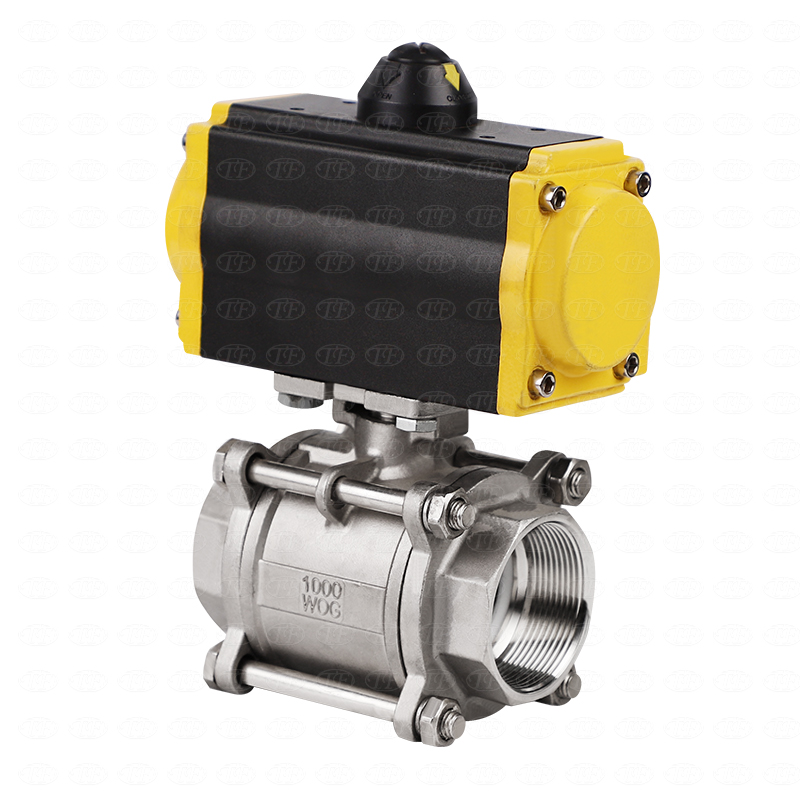
A key metric in flow control system design is pressure drop across a valve in the open position. The ball valve, particularly the full-bore or full-port design, presents virtually no obstruction to flow when open. The internal bore of a full-port ball valve matches the inner diameter of the connecting pipe, which means fluid passes through the ball valve without turbulence or significant energy loss. This characteristic makes the ball valve the preferred choice in systems where maintaining pipeline pressure efficiency is critical, such as water treatment plants, chemical processing facilities, and high-flow gas distribution networks.
The ball valve handles an impressive range of media, including liquids, gases, slurries, and steam, depending on material and seat configuration. Stainless steel ball valve variants, for example, provide exceptional resistance to corrosive chemicals and high-temperature fluids. A PTFE-seated ball valve performs well with aggressive solvents, while a metal-seated ball valve withstands abrasive or high-temperature process streams. This versatility means that a single ball valve design concept can be adapted to serve diverse industries without requiring fundamentally different valve architectures. Procurement teams appreciate this standardization because it simplifies inventory management and reduces spare parts complexity.
The ball valve is engineered for durability. Its compact, robust body construction minimizes the number of internal components that can wear or fail. In a properly specified ball valve, the main wear points are the seats and stem seals, both of which are designed for straightforward field replacement. This repairability extends the working life of the ball valve significantly, offering a strong return on investment compared to valves that require full replacement upon wear. The ball valve body itself, when manufactured from stainless steel or carbon steel, resists corrosion, impact, and thermal cycling under industrial operating conditions.
Industries that require frequent valve cycling, such as pharmaceutical manufacturing, petrochemical processing, and automated packaging lines, depend on the ball valve for its cycle endurance. A well-manufactured ball valve can perform hundreds of thousands of open-close cycles while maintaining sealing performance within specification. This cycle reliability reduces unplanned downtime and lowers total cost of ownership over the service life of the installation. Plant engineers consistently cite the predictable, long-term performance of the ball valve as a primary factor in repeated specification and procurement decisions.
The ball valve offers faster actuation through a simple quarter-turn operation, while a gate valve requires multiple turns to open or close. The ball valve also provides a tighter shutoff and a cleaner full-bore flow path, resulting in lower pressure drop and better sealing performance in most industrial applications. For frequent operation and reliable shutoff, the ball valve is typically the superior choice over a gate valve.
A standard ball valve is designed primarily for on-off service rather than precise throttling. When a ball valve is held in a partially open position for extended periods, the high-velocity fluid stream can erode the ball and seat surfaces. For applications requiring continuous flow modulation, a specially designed 'characterized' ball valve with a V-port or contoured ball is available. This variant of the ball valve enables accurate throttling while maintaining the core durability and shutoff capability of the standard design.
Selecting the correct ball valve material depends on the process fluid, operating temperature, and pressure rating of the system. A stainless steel ball valve is widely chosen for corrosive chemical service and food-grade applications. A brass ball valve suits low-pressure water and gas service in commercial buildings. For extreme temperatures or highly abrasive media, a metal-seated ball valve in alloy steel or special alloys is recommended. Always match the ball valve body material, ball material, and seat material to the specific service conditions to ensure reliable, long-term performance.
Foshan Tangzheng Pipe Fittings Co., Ltd. provides premium gate, globe, ball & control valves for petrochemical, power & HVAC industries. 30+ years expertise, 18-month warranty, 24/7 technical support. Request a custom solution today.
No. 36, 38, 40, 42, 44, 46 North Sixth Road, 1st Floor, Guangdong Lecong Steel World Hardware Accessories Decoration City, Lecong Town
Copyright © Foshan Tangzheng Pipe Fittings Co., Ltd. | Privacy policy

 EN
EN

