 ×
×
In pipeline systems across industrial, commercial, and municipal applications, backflow is one of the most damaging and disruptive conditions that engineers must prevent. check valves are the primary mechanical solution designed to allow fluid to flow in only one direction and automatically block reverse flow without requiring manual intervention. Knowing precisely when check valves should be installed is critical to designing a reliable and safe pipeline system.
The timing and placement of check valves within a pipeline is not a one-size-fits-all decision. It depends on the system's flow characteristics, pressure conditions, the nature of the fluid being transported, and the potential consequences of backflow. Understanding the specific scenarios and conditions that demand check valves helps engineers, plant managers, and procurement specialists make informed decisions that protect both equipment and operations.
Check valves should be installed whenever a pipeline system is exposed to conditions where pressure can reverse direction. This commonly occurs at pump discharge points, where a sudden pump shutdown can create a pressure drop that pulls fluid backward through the line. Without check valves at these locations, reverse flow can damage pump impellers, cause water hammer, and contaminate upstream fluid supplies. Check valves act as an automatic barrier the moment flow direction begins to reverse.
In systems where two or more fluid sources feed into a common line, check valves prevent one source from back-pressuring another. This is especially important in parallel pump configurations, where a running pump can force fluid back through a stopped pump if check valves are absent. Installing check valves at each pump outlet ensures that only the active pump contributes to the system and reverse contamination is fully blocked.
Check valves are also essential in vertical or inclined pipelines where gravity can drive fluid backward when flow stops. In high-rise building water supply systems, fire suppression lines, and drainage pipelines, the weight of the fluid column creates a natural tendency to reverse when pumping ceases. Check valves installed at critical elevation points in these systems hold the fluid in place and prevent draining back to the source, preserving system pressure and readiness. This is particularly relevant for fire protection systems where instant pressure availability is a safety requirement.
In chemical processing facilities, check valves are mandatory wherever incompatible fluids run in adjacent lines. Backflow between these lines can trigger dangerous chemical reactions, contaminate batch processes, or compromise product purity. Check valves must be installed at every injection point, mixing junction, and reactor feed line to isolate each fluid stream. The consequences of a missed installation in these environments range from product loss to catastrophic safety incidents, making check valves a non-negotiable component of process pipeline design.
Similarly, in oil and gas pipelines, check valves prevent hydrocarbon backflow from high-pressure zones into low-pressure equipment or storage vessels. They are installed downstream of compressors and at pipeline interconnections to maintain directional flow integrity under varying operating pressures. Engineers specify check valves with materials and pressure ratings suited to the specific fluid composition and temperature range in these demanding applications.
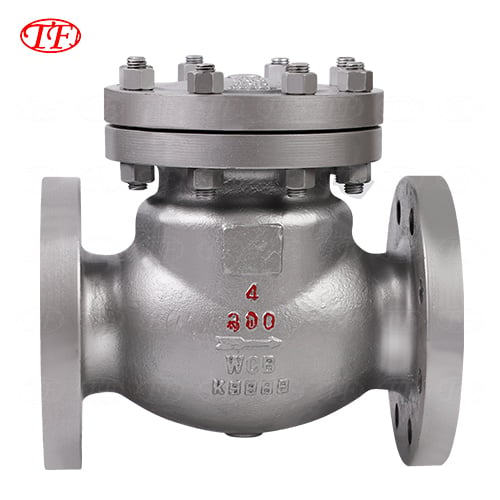
Municipal water distribution networks require check valves at pump stations, pressure zones, and service connections. When pressure zones differ across a distribution network, check valves prevent higher-pressure zones from forcing flow into lower-pressure areas, which could overwhelm infrastructure or disrupt service. At water treatment plants, check valves are installed along chemical dosing lines to prevent treated water from siphoning back into chemical storage tanks. This protects chemical integrity and ensures accurate dosing for safe drinking water delivery.
In wastewater and stormwater systems, check valves are installed at outfall structures and pump station discharge headers to prevent flooding backflow during high-water events. Without check valves at these critical points, surging external water levels can reverse flow into the collection system, overwhelming treatment capacity and causing sanitary overflows. Proper timing of check valve installation during system design avoids costly retrofits later.
The ideal time to install check valves is during the initial pipeline design and construction phase. At this stage, engineers can specify the correct check valve type, size, and orientation based on flow velocity, fluid viscosity, and pressure class. Check valves integrated during design are positioned at optimal locations where backflow risk is highest, such as immediately downstream of pumps, at system boundaries, and at elevation changes. Early installation also avoids the higher cost and operational disruption of shutting down a live system for retrofitting.
However, check valves are frequently added to existing systems when backflow problems become apparent through equipment damage, cross-contamination events, or operational failures. In these retrofit scenarios, identifying the precise source of backflow is the first step, followed by selecting check valves compatible with the existing pipe size, material, and operating pressure. Swing check valves, lift check valves, and wafer check valves each suit different retrofit conditions depending on available installation space and flow rate requirements.
Not all check valves respond equally under the same conditions, and selecting the right type at the right installation point directly determines how effectively backflow is stopped. Spring-loaded check valves are preferred in low-flow or intermittent-flow lines because they close quickly when flow drops, reducing the risk of reverse surge. Swing check valves are well suited to high-flow horizontal pipelines where a fast-opening disc offers minimal resistance during normal operation. Dual-plate check valves are widely installed in large-diameter pipelines where compact design and low pressure drop are priorities. Choosing the correct check valve type for each installation scenario ensures long service life and reliable backflow prevention throughout the system.
Check valves should be placed immediately downstream of pumps and compressors, at system inlets and outlets, at points where two fluid streams merge, and at elevation transitions in vertical pipelines. These locations represent the highest risk of reverse flow and are where check valves deliver the most protective value.
Most check valves are designed for horizontal installation, but many types including spring-loaded and dual-plate check valves can also be installed vertically with upward flow. Swing check valves typically require horizontal or specific angled installation to function correctly. Always verify the manufacturer's orientation requirements for the specific check valve selected.
Signs that check valves may have failed include unusual pressure fluctuations, audible water hammer, reverse flow indicators on flow meters, or visible fluid contamination in normally isolated lines. Routine inspection schedules, including pressure testing and disc movement verification, help confirm that check valves remain fully operational and continue to prevent backflow as designed.
Foshan Tangzheng Pipe Fittings Co., Ltd. provides premium gate, globe, ball & control valves for petrochemical, power & HVAC industries. 30+ years expertise, 18-month warranty, 24/7 technical support. Request a custom solution today.
No. 36, 38, 40, 42, 44, 46 North Sixth Road, 1st Floor, Guangdong Lecong Steel World Hardware Accessories Decoration City, Lecong Town
Copyright © Foshan Tangzheng Pipe Fittings Co., Ltd. | Privacy policy

 EN
EN

