 ×
×
Choosing the correct ball valve for oil, gas, and chemical applications is one of the most consequential decisions in industrial piping design. A ball valve controls flow by rotating a spherical disc inside the valve body, and its simplicity makes it highly effective across a wide range of pressures, temperatures, and fluid types. However, not every ball valve is engineered to perform reliably under the harsh conditions found in upstream oil extraction, midstream gas transmission, or aggressive chemical processing environments. Selecting the wrong ball valve can lead to leaks, process shutdowns, safety incidents, and costly maintenance cycles.
This guide breaks down the critical selection criteria for a ball valve used in oil, gas, and chemical service. Whether you are specifying a ball valve for a high-pressure wellhead, a natural gas distribution line, or a corrosive chemical feed system, understanding the right parameters will help you make a confident and technically sound choice. Every ball valve selection should begin with a clear picture of the operating environment, the fluid characteristics, and the mechanical requirements of the specific pipeline or process system.
The first consideration when selecting a ball valve is the operating pressure and temperature of the system. A ball valve rated for low-pressure water service is fundamentally different from one designed for high-pressure natural gas or steam. In oil and gas applications, a ball valve must often handle pressures exceeding 1000 PSI and temperatures ranging from sub-zero to several hundred degrees Celsius. The pressure class of a ball valve — typically expressed in ANSI class ratings such as Class 150, 300, 600, or 1500 — must match or exceed the maximum allowable operating pressure of the pipeline.
Temperature extremes also affect the choice of seat material and body material for a ball valve. High-temperature service in refinery applications may require a metal-seated ball valve rather than a soft-seated one, since PTFE and nylon seats can degrade at elevated temperatures. In cryogenic LNG applications, a ball valve must be built with materials that retain toughness and dimensional stability at extremely low temperatures without becoming brittle or losing sealing integrity.
The type of fluid passing through the ball valve directly determines which materials are acceptable for the valve body, trim, seats, and seals. In chemical processing, a ball valve may be exposed to strong acids, alkalis, solvents, or oxidizing agents that can degrade standard carbon steel or elastomer seals. For such environments, a ball valve constructed from stainless steel, duplex steel, or alloy materials offers far superior corrosion resistance. The seat and seal materials of the ball valve must also be chemically compatible — fluoropolymer seats like PTFE or PEEK are commonly specified for aggressive chemical service.
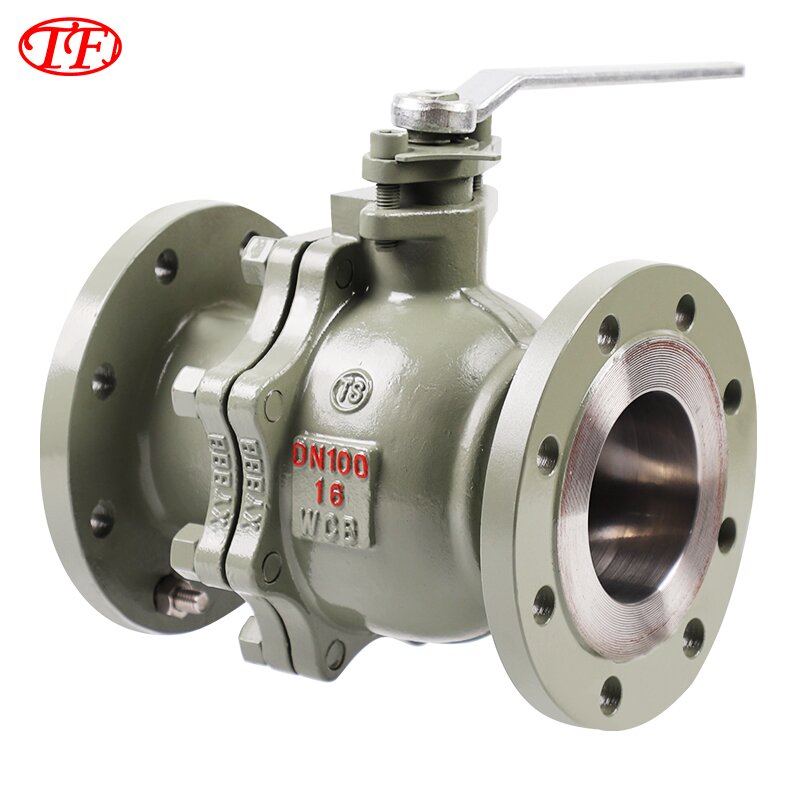
A ball valve is available in two primary bore configurations: full bore and reduced bore. A full bore ball valve has an internal diameter equal to the pipe bore, meaning it creates no restriction to flow. This is the preferred choice in oil and gas applications where pigging operations are required to clean or inspect the pipeline, since a full bore ball valve allows the pig to pass through without obstruction. A reduced bore ball valve, on the other hand, has a smaller internal opening and is typically more compact and cost-effective, making it suitable for general-purpose flow isolation where pigging is not a concern.
In a floating ball valve design, the ball is held in place only by the two seats, which means line pressure pushes the ball against the downstream seat to create a seal. This design works well in smaller sizes and lower pressure applications. For larger diameter pipelines or high-pressure gas and oil service, a trunnion mounted ball valve is the preferred configuration. In a trunnion ball valve, the ball is supported by fixed shafts at the top and bottom, which reduces the torque required to operate the ball valve and ensures consistent sealing performance even under high differential pressure. Most ball valve specifications in critical oil and gas service call for trunnion mounted designs in sizes above two inches.
End connection type is another configuration variable. A flanged ball valve is the dominant choice in oil, gas, and chemical pipelines because flanged connections are easy to install, inspect, and replace without cutting into the pipeline. A flanged ball valve with a WCB cast steel body and Class 150 or Class 300 rating represents one of the most widely deployed ball valve types across industrial facilities worldwide. The flange standard must align with the piping specification, whether ANSI, DIN, or JIS.
A ball valve used in oil, gas, or chemical applications must comply with recognized industry standards to ensure safety, interchangeability, and performance reliability. API 6D is the primary standard governing pipeline ball valve design, testing, and dimensional requirements in the oil and gas industry. API 608 covers metal ball valve design for general-purpose refinery and petrochemical use. A ball valve intended for chemical processing may also need to comply with ASME B16.34 for pressure and temperature ratings, or be fire-safe tested per API 607 or ISO 10497 to ensure that the ball valve maintains its sealing function during a fire event. Selecting a ball valve without verifying these compliance credentials is a significant risk in critical service environments.
Modern oil, gas, and chemical plants increasingly require automated operation of every ball valve in the process system. A ball valve can be fitted with pneumatic, hydraulic, or electric actuators to enable remote operation and integration with distributed control systems. When selecting a ball valve for automated service, the torque requirements, actuator mounting interface, and fail-safe position must all be carefully matched to the process safety requirements. A fail-closed ball valve is typically specified for emergency shutdown systems, while a fail-open ball valve may be preferred in cooling or purge service where flow must be maintained during a power failure.
For sour gas service, a ball valve must comply with NACE MR0175 or ISO 15156 to resist sulfide stress cracking. Low-alloy carbon steel with specific hardness limits or stainless steel alloys are typically specified for a ball valve in H2S-containing environments. Always verify that all wetted components of the ball valve meet the NACE material requirements.
To determine the correct pressure class for a ball valve, identify the maximum allowable operating pressure and the maximum operating temperature of your system simultaneously. The pressure-temperature rating tables in ASME B16.34 or the ball valve manufacturer's datasheet will indicate which pressure class — such as Class 150, 300, 600, 900, or 1500 — is required for your specific combination of pressure, temperature, and material.
A standard ball valve is generally not suitable for cryogenic LNG service without specific design modifications. A cryogenic ball valve requires an extended bonnet to keep the packing and stem seal away from the low-temperature fluid, cryogenic-grade seat materials, and body materials such as austenitic stainless steel or 9% nickel steel that retain toughness at very low temperatures. Always confirm that a ball valve has been tested and certified for the specific cryogenic temperature range before installation in LNG service.
Foshan Tangzheng Pipe Fittings Co., Ltd. provides premium gate, globe, ball & control valves for petrochemical, power & HVAC industries. 30+ years expertise, 18-month warranty, 24/7 technical support. Request a custom solution today.
No. 36, 38, 40, 42, 44, 46 North Sixth Road, 1st Floor, Guangdong Lecong Steel World Hardware Accessories Decoration City, Lecong Town
Copyright © Foshan Tangzheng Pipe Fittings Co., Ltd. | Privacy policy

 EN
EN

