 ×
Implementing a custom wcb butterfly valve for water starts with more than choosing a body material. The project team needs to confirm water chemistry, operating pressure, temperature, pipe dimensions, and control needs before approving a design. A custom wcb butterfly valve for water must fit the actual service conditions, not simply match a nominal pipe size or familiar specification.
A disciplined implementation process connects material review, dimensional design, actuator selection, and acceptance testing. For a custom wcb butterfly valve for water, each decision should be recorded against the system duty so that engineering, procurement, installation, and operations use the same requirements. The following approach helps teams move from a service description to a valve that can be installed and maintained with confidence.
Begin a custom wcb butterfly valve for water specification by documenting the fluid and its operating range. Identify whether the water is potable, raw, treated, cooling, or process water, and note suspended solids, dissolved chemicals, salinity, and cleaning agents. These details affect body protection, disc materials, shaft selection, and seat compatibility. A custom wcb butterfly valve for water should be reviewed under normal, startup, shutdown, and upset conditions rather than a single steady-state point.
Record design and operating pressure separately, including the pressure difference across the closed disc and any credible surge condition. Confirm minimum and maximum temperatures, expected cycling, flow direction, and whether isolation or throttling is required. This makes a custom wcb butterfly valve for water selection traceable to the process instead of relying on a general description such as water line. Clarify applicable codes and project specifications early so that the design basis does not change late in procurement.
WCB is a cast carbon steel body material, but its suitability depends on the water chemistry and the protection system. Assess corrosion exposure, coating or lining requirements, external environment, and maintenance access with the responsible materials engineer. A custom wcb butterfly valve for water may need a defined internal coating, compatible disc and shaft materials, and a seat elastomer matched to temperature and treatment chemicals. Do not assume that the word water alone establishes compatibility.
Request material certificates and clearly identify which components contact the fluid. For potable service, verify the required approvals and restrictions for every wetted material rather than assuming a body designation is sufficient. A custom wcb butterfly valve for water specification should state the required coating preparation, thickness or inspection criteria where applicable, and repair procedure. These details help inspectors judge the supplied assembly consistently and help maintenance teams preserve the intended corrosion barrier.
A custom wcb butterfly valve for water must match the pipeline connection standard, face-to-face envelope, nominal diameter, and available installation clearance. Confirm flange drilling, pressure class, gasket arrangement, and the space needed to remove or service the valve. A wafer, lug, or flanged body changes how the assembly is supported and removed. Share verified drawings and mating-pipe details before release, especially where an existing line leaves little room for adjustment.
Then select the operating arrangement from the required torque, access, and control method. Manual handles can suit accessible isolation points, while gear operators or actuators may be appropriate where torque, remote operation, or frequent cycling calls for them. For a custom wcb butterfly valve for water, ask the designer to confirm operating torque at the specified differential pressure, not only under unloaded conditions. The selection should also consider lockout, position indication, and safe access for operators.
Define whether the valve is intended for on-off isolation, limited throttling, or modulating control; the duty affects disc profile, seat selection, and actuator sizing. Specify the required leakage acceptance, flow direction limitations, and allowable pressure differential across the closed valve. A custom wcb butterfly valve for water should not be assigned a control duty unless the design and operating method support it. Discuss solids and debris that may collect around the disc or seat during service.
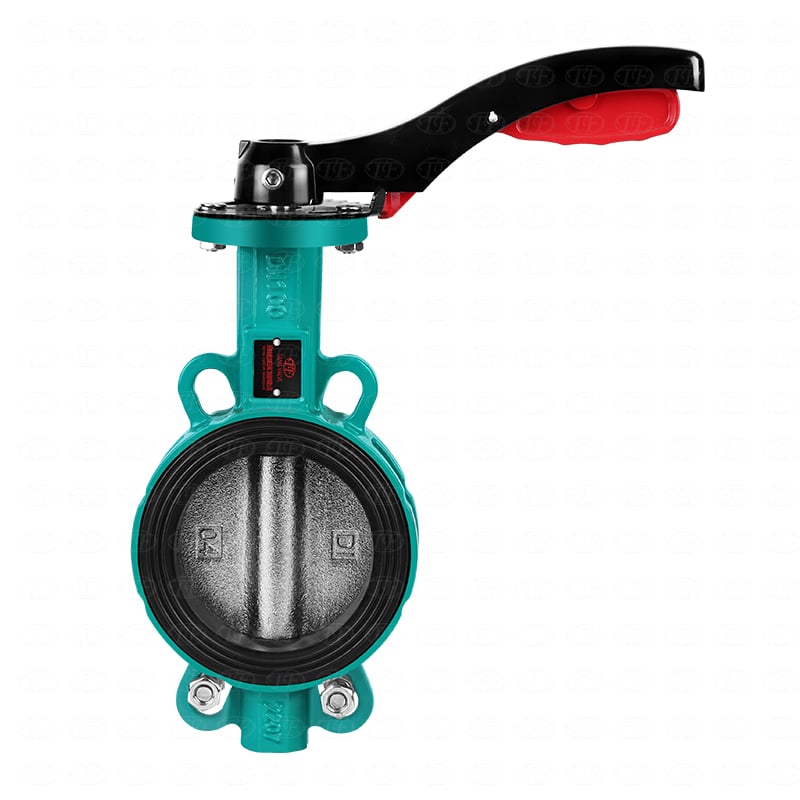
For configuration review, custom wcb butterfly valve for water planning can use a wafer-style manual arrangement as a reference point, but the linked product page identifies ductile iron, not WCB. It is not a substitute for confirming the specified body material. Request a project drawing, bill of materials, coating details, operating data, and inspection records for the actual custom wcb butterfly valve for water assembly.
Before approving production, check that the data sheet, drawing, and purchase specification agree on size, pressure class, materials, connection pattern, operator, and accessories. Resolve deviations in writing. For a custom wcb butterfly valve for water, this review is the point to catch mismatched flange dimensions, unclear coatings, or an actuator that cannot deliver the required torque. Include the installation orientation and any direction-specific limitations in the approved documentation.
Agree on inspection and test requirements that fit the service and project rules. These may include dimensional verification, material traceability, coating checks, shell testing, and seat leakage testing, as applicable to the design and governing specification. A custom wcb butterfly valve for water should arrive with records that identify the tested configuration and acceptance criteria. Avoid relying on a generic certificate if it does not establish which unit or requirements it covers.
At installation, protect the seat and disc from damage, clean the pipe interior, and verify that flange faces and gaskets are suitable. Align the pipeline without forcing the valve body into position, and use the specified bolting and tightening sequence. A custom wcb butterfly valve for water should be checked for free operation before pressure is introduced. Follow the approved orientation and clearance requirements, since nearby pipework or insulation can obstruct handle travel or actuator access.
During commissioning, cycle the valve under controlled conditions and confirm position indication, travel stops, actuator response, and leakage performance against the acceptance basis. Record baseline operating observations so future changes can be identified. For a custom wcb butterfly valve for water, maintenance intervals should reflect water quality, cycling frequency, corrosion conditions, and the manufacturer’s instructions. Inspection findings can then guide seat or coating maintenance before a minor issue affects system availability.
No. WCB suitability depends on chemistry, temperature, pressure, corrosion control, and the required approvals. A custom wcb butterfly valve for water needs a wetted-material review for its specific service. Potable water requirements may impose additional material and certification conditions. Confirm the full assembly, including coatings, seats, disc, and shaft, rather than judging by body material alone.
Provide fluid details, operating and design conditions, pipe size and connection standard, installation space, operating method, leakage requirements, and applicable codes. A custom wcb butterfly valve for water specification should also identify material, coating, testing, documentation, and any potable-water requirements. Clear inputs allow the engineering review to resolve design questions before manufacture and reduce uncertainty at installation.
Compare the delivered unit and records with approved drawings and purchase requirements, then inspect for transit damage and verify the connection dimensions. Before service, operate the custom wcb butterfly valve for water through its travel and check the installation, indication, and specified leakage criteria. Keep the commissioning results with maintenance records for later reference.
Foshan Tangzheng Pipe Fittings Co., Ltd. provides premium gate, globe, ball & control valves for petrochemical, power & HVAC industries. 30+ years expertise, 18-month warranty, 24/7 technical support. Request a custom solution today.
No. 36, 38, 40, 42, 44, 46 North Sixth Road, 1st Floor, Guangdong Lecong Steel World Hardware Accessories Decoration City, Lecong Town
Copyright © Foshan Tangzheng Pipe Fittings Co., Ltd. | Privacy policy

 EN

