 ×
×
Stainless steel butterfly valves stand out in corrosive environments where long service life is non-negotiable. Unlike lined valves or alternative alloys, stainless steel maintains structural integrity when exposed to aggressive media like chlorides, acids, and fluctuating temperatures. Its inherent resistance stems from a microscopic chromium oxide layer that reforms spontaneously when damaged—enabling true self-healing protection against uniform pitting and crevice corrosion. This property, combined with the material’s high-strength metallurgy, allows these valves to endure repeated pressure cycling without cracking—critical in demanding applications such as seawater desalination or chemical dosing.
Selecting the optimal stainless steel grade prevents premature failure. While Type 304 offers reliable general-purpose corrosion resistance, its limitations become apparent in chloride-rich environments. Type 316 contains 2–3% molybdenum—a key alloying element that significantly improves resistance to pitting and crevice corrosion from saltwater, bleach solutions, and sulfuric acid. In marine cooling systems, for example, 316 tolerates chlorides up to 1,000 ppm, whereas 304 may begin pitting above just 200 ppm. Molybdenum also enhances performance in acidic media below pH 4—common in pickling lines and wastewater treatment. This distinction directly supports longer maintenance intervals, improved process safety, and lower total cost of ownership.
| Property | 304 SS | 316 SS |
|---|---|---|
| Molybdenum Content | None | 2–3% |
| Max Chloride Tolerance | 200 ppm | 1,000 ppm (seawater) |
| Pitting Resistance | Moderate | High |
| Cost Premium | Baseline | 20–40% higher |
| Ideal Media | Cold water, weak alkalis | Seawater, acids, bleach |
Ignoring material compatibility invites costly consequences. A North American chemical processor installed Type 304 butterfly valves in a cooling loop handling 400 ppm chloride solutions to reduce upfront costs. Within eight months, severe pitting developed at sealing surfaces—triggered by chloride-induced stress corrosion cracking accelerated by crevices behind the disk. The resulting leaks caused unplanned downtime and compromised system integrity. Replacing all 37 valves cost approximately $740,000 (NACE, Corrosion Cost & Prevention Survey, 2023)—more than triple the initial savings. The incident underscores how improper grade selection undermines seal reliability, increases lifecycle costs, and introduces unacceptable safety risks in chemical transfer systems.
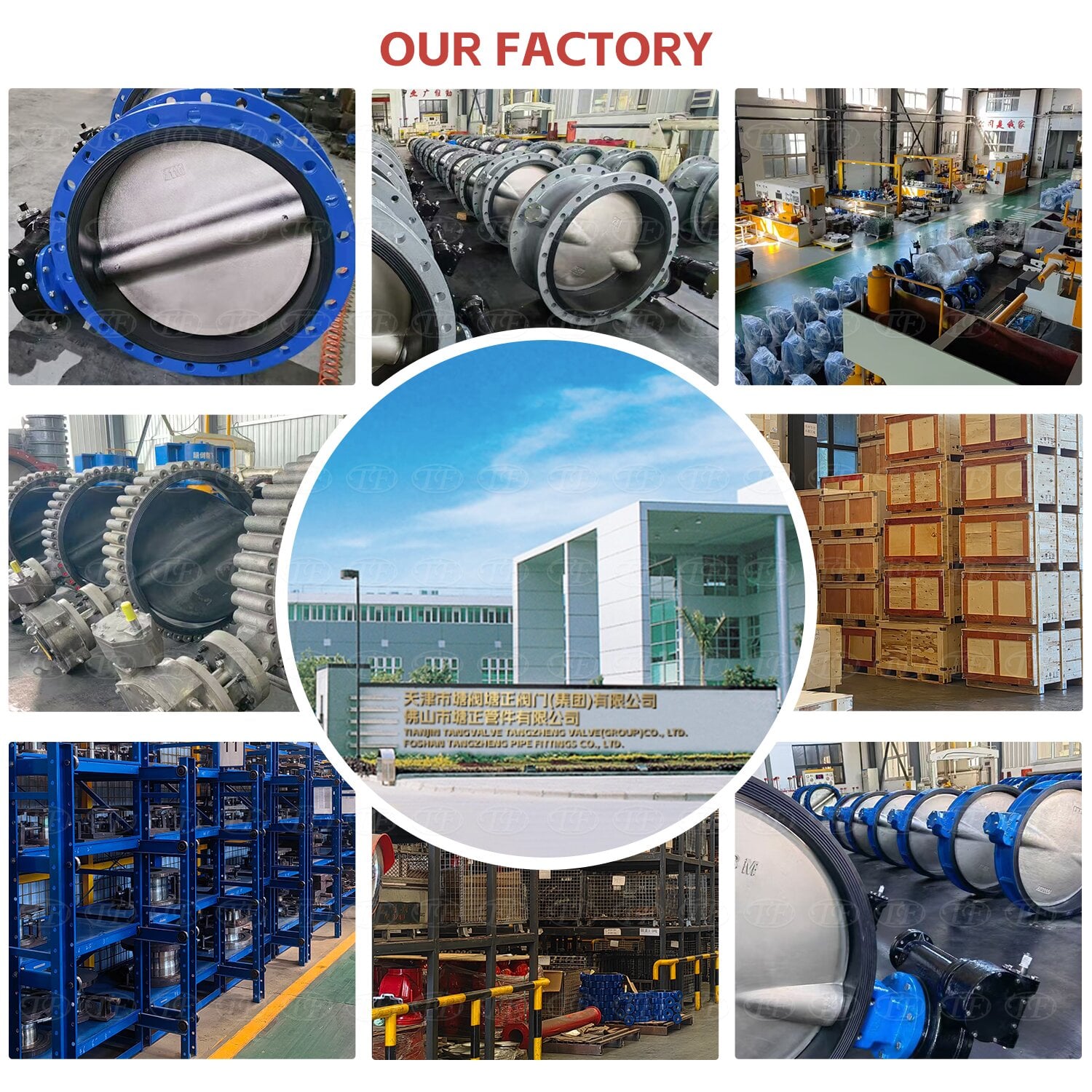
Stainless steel butterfly valves deliver distinct design advantages that support operational efficiency and critical zero-leak performance. Their compact, lightweight construction enables rapid actuation and precise flow control—especially valuable in dynamic processes requiring frequent throttling or emergency shutoff. Crucially, stainless steel’s dimensional stability under thermal and pressure cycling ensures consistent seat contact over time, supporting repeatable bubble-tight shutoff even after years of service.
Design profoundly impacts installation feasibility, actuation reliability, and system integrity. Wafer-style valves fit between flanges using through-bolts—ideal for space-constrained retrofits and widely used in industrial water treatment due to their ease of installation and low weight. Lug-style valves feature threaded lugs on both sides, allowing independent flange attachment. This configuration provides unmatched flexibility—particularly useful at T-junctions or dead-end services—and enables safe valve removal under pressure, making them preferred in hydrocarbon processing where isolation integrity is paramount. Triple-offset (eccentric metal-seated) designs take sealing performance further: their precisely engineered disc geometry eliminates rubbing during operation and achieves frictionless contact only at final closure—meeting stringent bubble-tight requirements per NEMA FC-1. These valves are increasingly specified in pharmaceutical pure steam systems and other sterile processes where leakage minimization is non-negotiable.
Understanding industry-specific needs clarifies why stainless steel butterfly valves are indispensable across sectors. In water treatment plants, they reliably handle chlorinated drinking water, aggressive wastewater, and chemical dosing streams with wide pH swings. Their corrosion resistance ensures decades of service—over 50% of new municipal and industrial facilities now specify stainless steel for critical service points (Global Water Market Report, 2024). Operators benefit from reduced maintenance frequency and predictable performance in sludge control and disinfection systems.
In oil and gas, stainless steel butterfly valves withstand extreme temperature gradients, high-pressure fluctuations, and exposure to seawater or sour gas—conditions where material degradation poses serious safety and environmental risks. Their robustness makes them especially suitable for offshore cooling loops and pipeline isolation, where replacement logistics are complex and costly.
Pharmaceutical manufacturing demands valves that ensure sterility, cleanability, and zero contamination risk. Stainless steel butterfly valves meet hygienic standards including ASME BPE and FDA-compliant surface finishes (Ra ≤ 0.8 µm), with smooth internal geometries that inhibit biofilm formation. Market research projects stainless steel sanitary butterfly valves will account for 46.7% of global sanitary valve revenue by 2025—driven by validated material purity, sterilization compatibility, and precise flow control in buffer preparation, CIP/SIP cycles, and sterile transfers during bioprocessing.
Stainless steel butterfly valves offer exceptional corrosion resistance, high-temperature tolerance, and long-term durability—making them ideal for aggressive media such as seawater, chlorides, and acids. For marine and chemical applications, SS316 is the preferred choice due to its superior chloride resistance over SS304. However, these benefits come at a higher initial cost compared to alternatives like ductile iron. In standard potable water systems without corrosive constituents, ductile iron—often coated with epoxy or fusion-bonded epoxy—provides strong cost-performance balance, delivering up to 40% savings over stainless steel while meeting regulatory requirements (AWWA C110/C151 standards).
Key factors guiding selection include:
Decision-makers should evaluate whether operational conditions truly demand stainless steel’s chemical resistance—or whether alternative materials better align with economic and functional requirements. Following guidance from authoritative sources such as the American Iron and Steel Institute (AISE) and NACE International helps prevent premature failure in mission-critical systems. Thoroughly analyze operating conditions before specifying valve materials.
Stainless steel butterfly valves excel in corrosive environments due to their high corrosion resistance and long-term durability.
SS316 contains molybdenum, which significantly improves its resistance to chloride and acid pitting, making it suitable for marine and chemical applications.
They are commonly used in water treatment, oil & gas, and pharmaceutical industries due to their robust performance and compliance with industry-specific standards.
Consider the application pressure range, media aggressiveness, industry compliance mandates, and total lifecycle costs.
Foshan Tangzheng Pipe Fittings Co., Ltd. provides premium gate, globe, ball & control valves for petrochemical, power & HVAC industries. 30+ years expertise, 18-month warranty, 24/7 technical support. Request a custom solution today.
No. 36, 38, 40, 42, 44, 46 North Sixth Road, 1st Floor, Guangdong Lecong Steel World Hardware Accessories Decoration City, Lecong Town
Copyright © Foshan Tangzheng Pipe Fittings Co., Ltd. | Privacy policy

 EN
EN

